Getting a Grand Traverse Home Ready for Winter
What a service visit actually covers, and what you can check yourself first.
September 15, 2026 · 3 min read
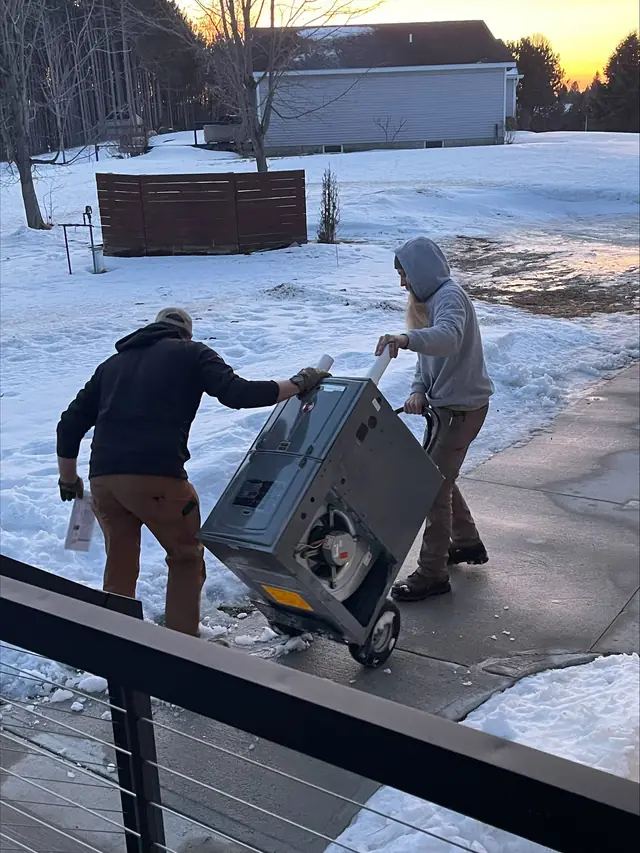
By the time the first real cold snap hits the Grand Traverse Region, most homeowners have already decided how their winter with the furnace is going to go, they just don't know it yet. A fall tune-up isn't a formality. It's the one chance every year to catch a small problem while it's still a small problem, before it's an emergency call on a Sunday in January with lake effect snow piling up outside.
What a real tune-up covers
A proper fall visit is more than swapping a filter. The technician checks the heat exchanger for cracks and corrosion, tests the ignitor or pilot assembly, measures the temperature rise across the furnace, checks gas pressure, inspects and tightens electrical connections, and cleans the blower wheel if it's carrying dust. On homes with older duct systems, which is a lot of houses in this area built in the 1980s, we'll also check for airflow restrictions that make the furnace work harder than it needs to. All of that gets caught in September, when a part on order is an inconvenience, not an emergency.
Carbon monoxide is the one that matters most
A cracked heat exchanger doesn't always announce itself. It can run for a season with no obvious symptom until it starts leaking combustion gas into the airflow. That's the single most important thing a fall inspection is checking for, and it's not something a homeowner can verify without the right equipment. If your furnace hasn't had a fall service in a couple of years, this alone is worth the visit.
What you can check yourself first
There's a short list a homeowner can genuinely handle before calling anyone. Replace or check the filter, a dirty one restricts airflow and makes the whole system work harder. Test your carbon monoxide detector's batteries the same weekend you change the clocks. Walk your vents and returns and clear anything blocking them, furniture pushed against a return air grille is more common than people think. Listen for anything new, a squeal, a rattle, or a burning dust smell in the first few minutes of the season's first run is worth mentioning to whoever services the unit.
Why fall, specifically
Waiting until the first cold night to find out your furnace has a problem means you're troubleshooting during the exact week every other furnace in the region is also failing, and every other homeowner is also calling. Scheduling in fall, before the rush, means a technician has the time to actually go through the whole system instead of doing the fastest possible fix to get heat back on. It's also when we can order a part if one's needed without anyone shivering while it ships.
A thermostat setting worth checking too
While a technician is in the house, it's a good time to double check the thermostat schedule as well. The Department of Energy recommends holding around 68 degrees during the winter months for the best balance of comfort and energy use, and a lot of the homes we visit are set several degrees warmer out of habit rather than by choice. Dropping a degree or two, especially overnight or while the house is empty during the day, adds up over a full northern Michigan winter without anyone feeling a real difference in comfort. It costs nothing to check, and it's one of the easiest adjustments a homeowner can make on their own.
The bigger picture
None of this is about selling a service plan. It's about the fact that a furnace running efficiently costs less to operate every single month it's cold here, and northern Michigan is cold for a long stretch of the year. A fall visit is the cheapest insurance most homeowners in this region will buy all year, and it's a lot easier to schedule in September than to explain to your family why there's no heat on a night with snow already on the ground.
- Change or check the filter before the season's first cold run.
- Test the carbon monoxide detector's batteries.
- Clear furniture or boxes blocking any vent or return air grille.
- Check the thermostat schedule against the season, not just the setting from last spring.
Comfort Heating Inc, (231) 888-0293
Call (231) 888-0293