Repair or Replace: How to Read the Signs on an Aging Furnace
Three real questions worth asking before you pay for another repair.
September 15, 2026 · 3 min read
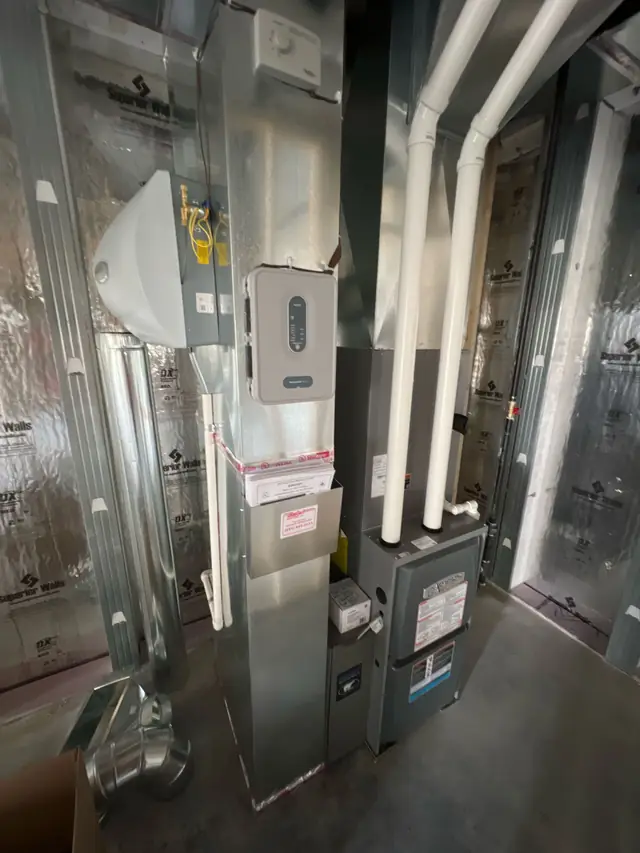
Every fall we get the same call. A furnace kicks on fine but the house never quite gets warm, or it's made a new noise all week, or this is the second repair since spring. The homeowner wants to know one thing: is this worth fixing, or should I just replace it. There's no single answer that fits every furnace, but there are three real markers worth checking honestly before you spend money either way.
The three things that actually matter
Poor efficiency, repeat repairs, and age between 10 and 15 years. Those aren't a sales script, they're the same three things a technician is weighing in their head the moment they open the cabinet. None of them alone is a verdict. A 12 year old furnace that's never given you trouble and heats the house evenly is not a furnace to replace on age alone. But when two or three of these line up at once, that's when a repair bill stops making financial sense.
When efficiency is the real problem
Efficiency loss shows up as behavior, not just a number on an invoice. Rooms at the far end of the duct run stay cold no matter how long the furnace runs. The system short cycles, kicking on and off in bursts instead of holding a steady call for heat. Your gas usage climbs from one January to the next with no change in how you're living in the house. In a lot of Traverse City area homes built in the 1980s, some of that is the duct run itself rather than the furnace, so a service call should always check both before anyone recommends a new unit. But a furnace that's lost its ability to hold a consistent burn is working harder for less heat every single winter it stays in service.
The repeat-repair pattern
One repair in a season means nothing. A pattern does. If this is your second service call since the leaves turned, or if the part that failed last winter is failing again this winter, you're not paying to fix a furnace anymore, you're paying to keep a failing furnace limping along one component at a time. Ignitors, flame sensors, and blower capacitors are common, inexpensive fixes on their own. It's when they start showing up back to back on the same unit that the pattern is telling you something the single repair bill won't.
The age line: 10 to 15 years
Heat exchangers, blower motors, and control boards all have a working life, and most residential furnaces start showing real wear somewhere in that 10 to 15 year window regardless of brand. Parts for an older unit also get harder and slower to source every year past that mark, which matters a lot more here than in a mild climate. A part on backorder in late January in northern Michigan, with lake effect snow on the ground and a house that needs heat now, is a very different problem than the same delay in September.
What we actually look at on the call
When one of our technicians is standing in front of your furnace, they're not guessing. They're checking the heat exchanger for cracking or corrosion, testing the blower motor's draw, reading the burn, and pulling the service history if we've been out before. Jake, who's on a lot of these calls, will tell a homeowner straight when a repair is the right call and just as straight when it isn't. That's the same answer whether the furnace is ours to service already or brand new to us.
Making the call
If none of the three markers apply, repair it and keep going, that's the right answer more often than people expect. If two or three do, get a straight assessment before you spend more on a unit that's telling you it's done. We give free quotes on replacements specifically so that decision doesn't have to be made in the dark, and Michigan Saves financing is available if the timing of a replacement doesn't line up with the timing of a failure.
- Your energy bills have climbed with no change in how you're heating the house.
- You've had more than one repair visit on the same furnace this heating season.
- The unit is past 10 years old and parts are taking longer to source than they used to.
Comfort Heating Inc, (231) 888-0293
Call (231) 888-0293